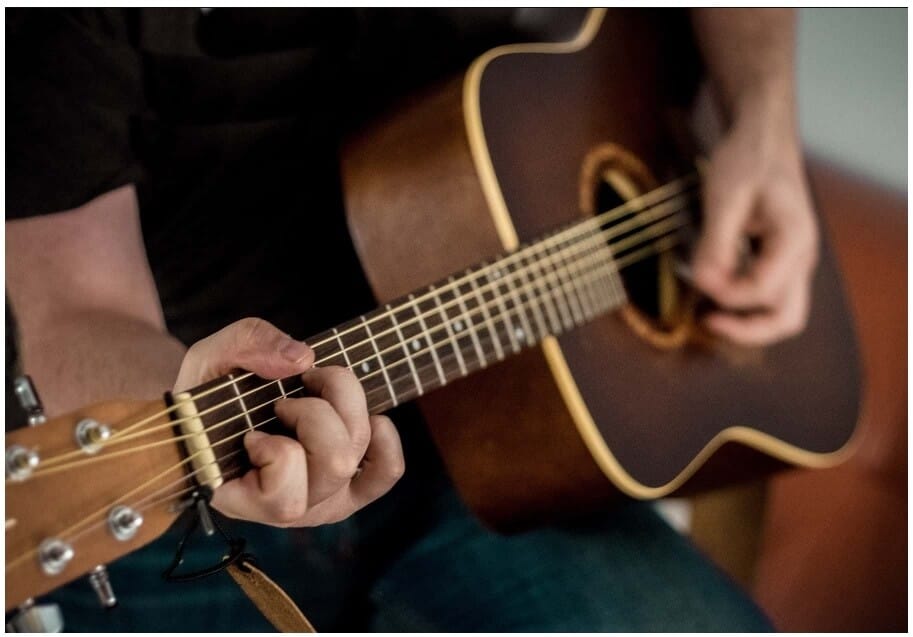
Developing guitar left hand strength is an important part of becoming a more confident and capable guitarist.
Many beginners struggle with chord shapes, bar chords, finger stretches, and clean note production because the muscles and coordination required for these movements are still developing.
Fortunately, with the right exercises and practice habits, guitar left hand strength can improve steadily over time. Many players assume that strength alone is the key to better guitar playing.
While strength is important, control, flexibility, endurance, and finger independence are equally valuable. A player who uses efficient technique often performs better than someone who relies only on force.
The left hand performs a wide variety of tasks during guitar playing. It must press strings accurately, switch between chord shapes, execute scales, and maintain clean note separation. Weakness or poor control in the left hand can make all of these activities more difficult.
Consistent training is usually more effective than occasional long practice sessions. Short daily exercises help build muscle memory while reducing unnecessary tension and fatigue. Another important factor is technique.
Poor hand position, excessive pressure, and inefficient movements may slow progress and create discomfort. Learning proper mechanics allows guitar left hand strength to develop more naturally.
This guide explains common strength related problems, useful finger exercises, chord and position training methods, ways to improve finger independence, and habits that support long term progress and injury prevention.
Guitar Left Hand Strength Problems And The Most Common Technique Mistakes

Many players struggle with guitar left hand strength because of technical mistakes rather than a lack of physical ability. Identifying these issues early can accelerate improvement. One common mistake is pressing the strings much harder than necessary.
Excessive pressure creates tension and fatigue while offering little benefit to tone quality. Poor thumb placement is another frequent issue. When the thumb is positioned incorrectly behind the neck, the fingers often lose efficiency and flexibility.
This can make developing guitar left hand strength more difficult. Many beginners also neglect structured exercises. Simply playing songs without focused technique work may not provide enough challenge for strength development.
Hand tension is another problem. Some players unconsciously tighten their wrists, forearms, or shoulders while practicing. This reduces movement efficiency and may lead to discomfort. Rushing through difficult exercises can also slow progress.
Playing too fast before achieving control often reinforces mistakes rather than improving technique. Inconsistent practice habits may create additional challenges.
Strength and coordination develop more effectively through regular repetition than through occasional long sessions. Correcting these mistakes provides a stronger foundation for building guitar left hand strength safely and efficiently.
Guitar Left Hand Strength Exercises For Daily Finger Opening And Pressure Control
Daily exercises are one of the most effective ways to improve guitar left hand strength. However, the goal should be controlled strength rather than unnecessary force. Chromatic exercises are a popular starting point.
Playing consecutive frets with different fingers encourages coordination while gradually building endurance. Finger stretching exercises can also be useful.
Many guitarists find that the ring finger and little finger require additional attention because they are often weaker and less independent. Pressure control drills are equally important.
Instead of pressing strings as hard as possible, players should learn to apply only the amount of pressure needed for a clean note. This approach improves guitar left hand strength while reducing fatigue.
Practicing slowly with a metronome helps maintain accuracy and consistency. Controlled movements are generally more productive than rushed repetitions. Short daily sessions often produce better results than occasional marathon practice.
Ten to twenty focused minutes can create noticeable improvements over time. Regular finger exercises help develop both endurance and coordination, making guitar left hand strength more useful in real musical situations.
Chord Changes, Bar Chords, And Position Shifts For More Control
Chord transitions and position changes are practical ways to improve guitar left hand strength while developing musical skills at the same time. Bar chords are especially useful because they require the index finger to press multiple strings simultaneously.
This challenges both endurance and technique. Many beginners struggle with bar chords because they rely on excessive force instead of proper hand positioning. Adjusting wrist angle and finger placement often improves results significantly.
Chord change exercises also strengthen coordination. Moving slowly between common chord shapes allows players to develop control while improving guitar left hand strength. Position shifts along the neck provide additional benefits.
These movements encourage smoother hand transitions and better spatial awareness. Practicing with a metronome helps maintain steady timing during chord changes and position adjustments. Over time, these exercises reduce tension and improve efficiency.
Players often notice cleaner transitions, stronger chord shapes, and less fatigue during longer practice sessions. Consistent work in these areas makes guitar left hand strength more practical and directly applicable to everyday playing.
Guitar Left Hand Strength Exercises For Better Finger Independence And Flexibility

Strong guitar technique requires more than strength alone. Finger independence and flexibility are essential parts of effective guitar left hand strength development.
Finger independence exercises train each finger to move without relying excessively on the others. This skill becomes particularly valuable during scales, lead playing, and advanced chord shapes. The little finger is often the weakest finger for many guitarists.
Targeted exercises can help improve both strength and coordination in this area. Stretching exercises support flexibility and allow the hand to reach wider intervals more comfortably. Better flexibility often improves overall playing efficiency.
Slow accuracy focused drills are extremely effective for developing guitar left hand strength and control simultaneously. Precision should always come before speed. Keeping finger movements economical is also important.
Lifting fingers too far away from the fretboard wastes energy and reduces efficiency. Many players experience significant improvement when they focus on control rather than speed during practice.
Combining flexibility, independence, and strength exercises creates a more balanced approach to developing guitar left hand strength.
Injury Prevention Tips And Better Practice Habits For Long Term Progress
Building guitar left hand strength should always be approached with long term health in mind. Proper habits help reduce injury risk and support consistent improvement. Warming up before practice is highly recommended.
Simple finger movements and light stretching can prepare the muscles and joints for more demanding exercises. Players should learn to distinguish between normal fatigue and pain.
Mild tiredness may be expected during training, but sharp pain should never be ignored. Regular breaks are important during longer practice sessions. Short pauses help prevent excessive strain and allow the hands to recover.
Posture also affects performance. Relaxed shoulders, proper wrist alignment, and comfortable sitting position all contribute to healthier technique while developing guitar left hand strength.
Trying to progress too quickly can create unnecessary tension and increase injury risk. Gradual improvement is usually more sustainable. Adequate sleep and recovery also support muscle development and coordination.
Practice gains often occur during recovery periods rather than during the session itself. By following these habits, guitarists can improve guitar left hand strength safely while building a stronger foundation for long term musical growth.
See you in the next post,
Anil UZUN