The difference between mixing and mastering is one of the most important concepts to understand in modern audio production.
Whether you are producing music, working on podcasts, or creating film soundtracks, knowing how these two stages function will directly impact the quality of your final output.
Many beginners assume they are similar processes, but in reality, they serve very different purposes and require different mindsets.
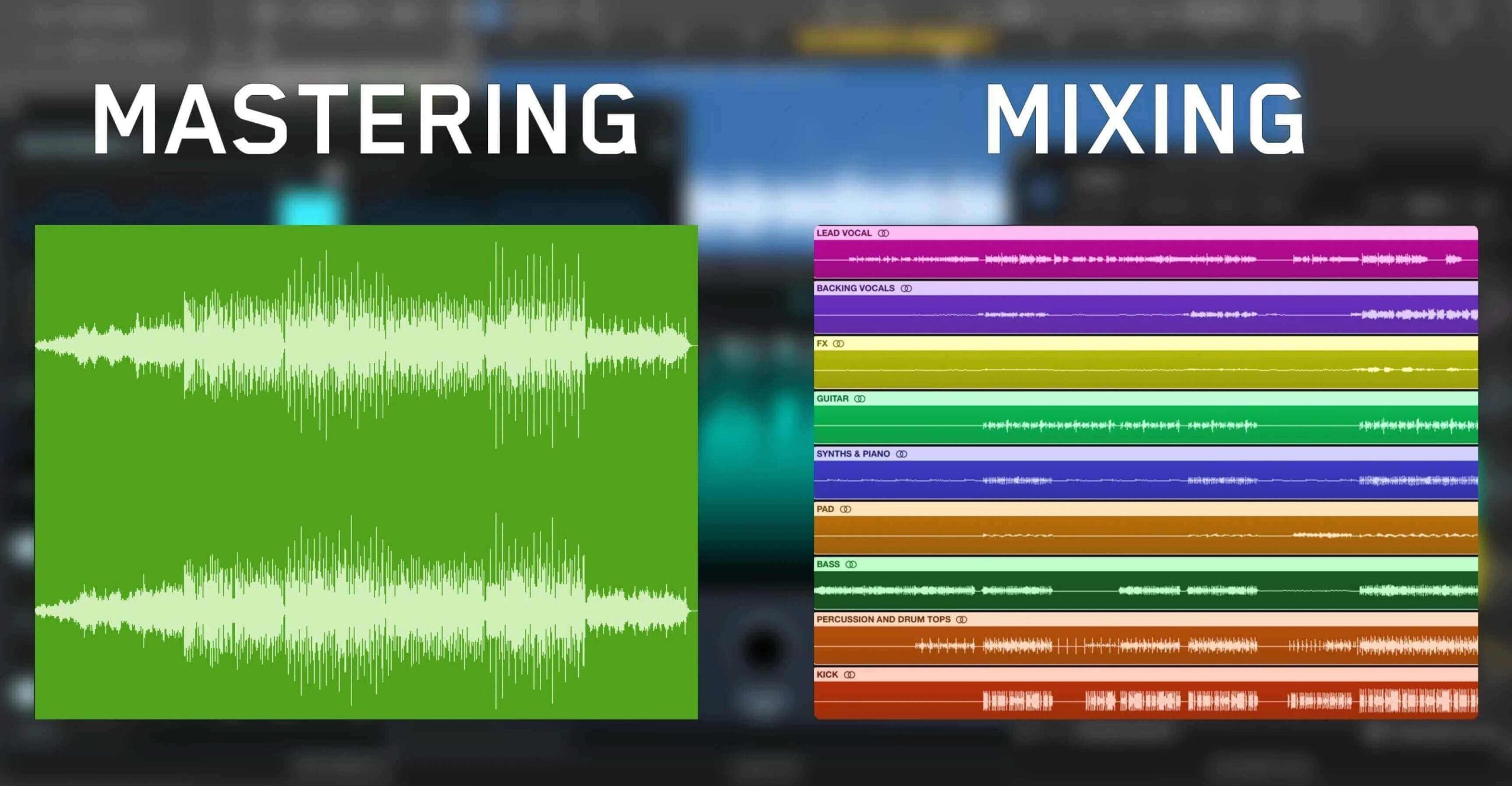
Mixing is the stage where all individual tracks such as vocals, drums, bass, and instruments are balanced and shaped to work together as a cohesive piece.
Mastering, on the other hand, is the final polish that prepares the mixed track for distribution across platforms. In simple terms, mixing focuses on the internal balance of a track, while mastering focuses on the external presentation.
Understanding the difference between mixing and mastering helps you avoid common workflow mistakes. For example, trying to fix arrangement or balance issues during mastering often leads to poor results.
Each stage has its own role, and respecting that separation ensures a cleaner, more professional sound. Another key point is that mixing is usually done in a multi-track environment, while mastering works with a single stereo file.
This technical difference shapes how decisions are made. Mixing allows detailed control over each sound element, while mastering requires subtle adjustments that affect the entire track.
For producers aiming to achieve industry-level sound, learning the difference between mixing and mastering is not optional. It is a foundational skill that defines how efficiently and effectively you can complete a project.
Difference Between Mixing And Mastering Explained: Goals, Workflow, And Final Output

To clearly understand the difference between mixing and mastering, it is best to look at their goals, workflows, and outputs. Mixing is all about building the track. It involves shaping each sound element so that everything fits together harmoniously.
Mastering is about refining the final result and ensuring it translates well across different listening systems. In the mixing stage, the workflow is detailed and track-focused.
You adjust volume levels, apply EQ to remove unwanted frequencies, use compression to control dynamics, and position sounds in the stereo field. Every decision affects how elements interact with each other.
Mastering has a completely different workflow. Instead of working on individual tracks, you work on a finished stereo mix.
The goal is to enhance clarity, balance frequencies globally, and reach appropriate loudness levels without damaging the dynamics of the track. The difference between mixing and mastering is also visible in the final output.
A mixed track is not yet ready for release. It may sound good, but it still lacks the final polish and consistency needed for streaming platforms or broadcasting. A mastered track, however, is optimized for playback across different devices, from headphones to car speakers.
Another important distinction is perspective. Mixing requires a zoomed-in approach, focusing on details. Mastering requires a zoomed-out perspective, focusing on the overall sound and consistency.
What Happens In Mixing: Levels, EQ, Compression, Panning, And Effects
Mixing is where the creative and technical aspects of audio production come together. Understanding this stage is essential to fully grasp the difference between mixing and mastering.
During mixing, every element of a track is shaped to achieve clarity, balance, and emotional impact. The first step is usually level balancing. Each track must sit correctly in the mix. If vocals are too loud, they overpower the instruments.
If they are too quiet, the message is lost. Achieving the right balance is the foundation of a good mix. EQ is used to carve out space for each element. For example, removing low frequencies from non-bass instruments can prevent muddiness.
This process ensures that every sound has its own place in the frequency spectrum. Compression helps control dynamics. It smooths out volume differences and keeps elements consistent. However, overusing compression can make a mix sound lifeless.
Panning creates width and separation. By placing sounds across the stereo field, you avoid overcrowding the center and create a more immersive listening experience.
Effects like reverb and delay add depth and atmosphere. They help place sounds in a virtual space, making the mix feel more natural and engaging.
All these processes highlight the difference between mixing and mastering, as mixing involves detailed manipulation of individual tracks, something that is not possible in mastering.
What Happens In Mastering: Loudness Targets, Tonal Balance, Limiting, And Formats
Mastering is the final step in the production chain and plays a crucial role in defining how a track is perceived. The difference between mixing and mastering becomes very clear here because mastering focuses on optimization rather than construction.
One of the primary tasks in mastering is achieving the right loudness level. Streaming platforms have specific loudness standards, and tracks must meet these requirements without losing dynamic range.
Tonal balance is adjusted using subtle EQ moves. If a mix is slightly too bright or too dull, mastering can correct it, but only within limits. Major issues should always be fixed during mixing. Limiting is used to increase perceived loudness while preventing clipping.
This process must be handled carefully to avoid distortion or loss of detail. Another key aspect is format preparation. Mastering ensures that the track is exported correctly for different platforms, whether it is streaming, radio, or physical media.
The difference between mixing and mastering is especially important here because mastering cannot fix poorly mixed tracks. It enhances what is already there rather than rebuilding it.
Difference Between Mixing And Mastering In Real Projects: Before And After Examples

The difference between mixing and mastering is easiest to understand when comparing before and after examples. A raw recording often sounds unbalanced and lacks clarity. Instruments may overlap, vocals may be unclear, and the overall sound can feel messy.
After mixing, the track becomes more defined. Each element has its own space, and the balance between instruments and vocals improves. The listener can clearly hear the details, and the track starts to feel professional.
Mastering takes this improved mix and elevates it further. The track becomes louder, more consistent, and better suited for playback on different systems. Subtle enhancements make the overall sound more polished.
In real-world projects, the transition from raw recording to mix and then to master demonstrates the full difference between mixing and mastering. Each stage builds on the previous one, but they do not replace each other.
For example, if a vocal is buried in the mix, mastering will not be able to bring it forward effectively. This reinforces the importance of doing each stage correctly.
Common Mistakes To Avoid: Overprocessing, Bad References, And Monitoring Issues
Understanding the difference between mixing and mastering also helps avoid common mistakes that can ruin a track. One of the most frequent errors is overprocessing.
Applying too many plugins or excessive EQ and compression can degrade the sound. Using poor reference tracks is another issue. Comparing your mix to tracks from different genres or production styles can lead to incorrect decisions.
References should always match the style and quality you aim to achieve. Monitoring problems also play a big role. If your listening environment is not accurate, your decisions may not translate well to other systems.
This can affect both mixing and mastering. Another mistake is trying to fix mixing issues during mastering. This misunderstanding of the difference between mixing and mastering often results in a compromised final product.
Finally, rushing the process can lead to poor outcomes. Both mixing and mastering require careful listening and adjustments. Taking breaks and revisiting your work can significantly improve the final result.
See you in the next post,
Anil UZUN