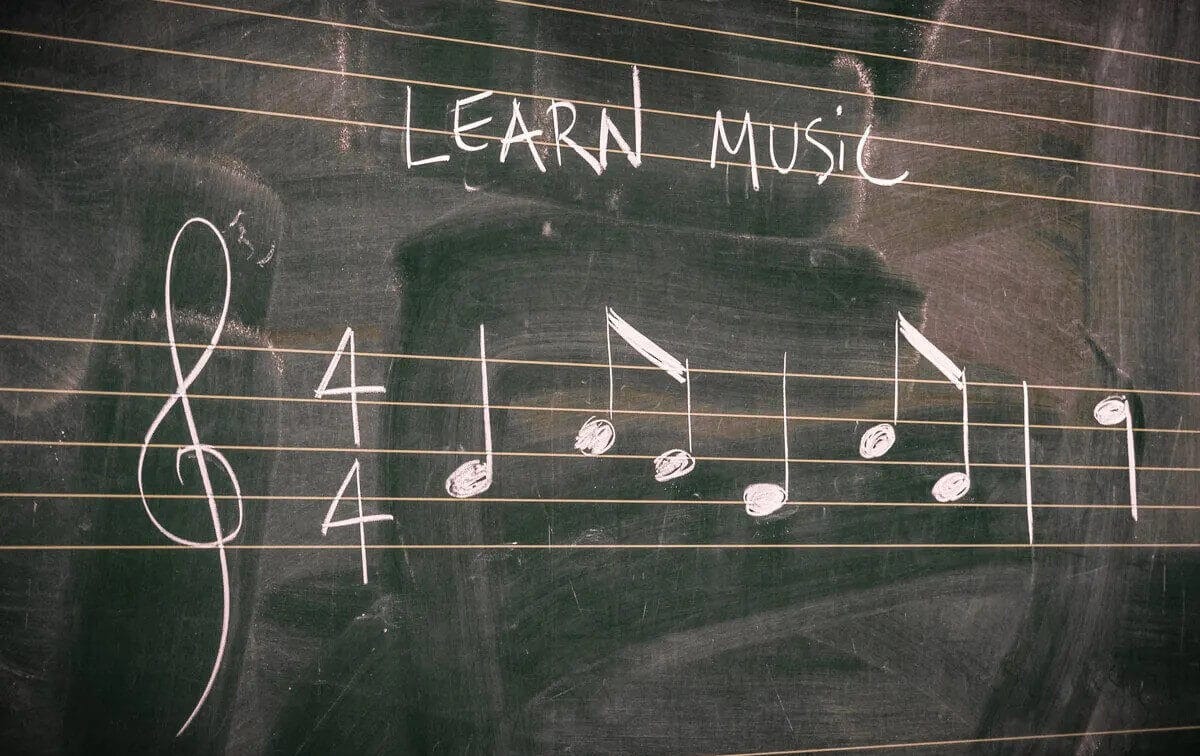
Many beginners believe that the best way to read music is to memorize every note one by one. However, it is usually more effective to learn music notes by understanding how they work together.
Music reading becomes easier when learners recognize patterns, intervals, rhythm, and measure structure instead of depending only on memory. This approach helps musicians read faster, understand pieces more clearly, and apply their knowledge to new songs.
Memorization can be useful in the beginning. It may help a student recognize note names on the staff or remember a short melody. However, long term progress requires more than remembering isolated information.
Music is built on relationships. Notes move up, down, repeat, form patterns, create intervals, and follow rhythmic structures. When these relationships are understood, reading becomes more natural.
A musician who understands the logic behind notation can solve new pieces more confidently. Instead of treating every score as something completely new, they begin to recognize familiar shapes and musical ideas.
This guide explains how to learn music notes through patterns, intervals, rhythm, daily practice, ear training, theory, and common mistakes to avoid.
Learn Music Notes By Understanding Patterns Intervals And Rhythm

One of the best ways to learn music notes is to focus on patterns. Music often repeats similar shapes, rhythm groups, and melodic movements. Once these patterns become familiar, reading becomes easier.
Intervals are especially important. An interval is the distance between two notes. When a melody moves step by step, skips upward, or jumps downward, the musician can follow the direction instead of reading every note separately. Rhythm is equally important.
Knowing the pitch is not enough if the timing is wrong. Note values, rests, ties, and measures all shape how music flows. Time signatures also help organize the music. They show how beats are grouped and where the natural accents occur.
This makes reading more structured. Students who connect pitch, rhythm, and movement begin to understand music as a language. This is why pattern recognition is essential for anyone who wants to learn music notes in a lasting way.
Learn Music Notes Without Depending Only On Memorization
Memorization is useful, but it should not be the only method. A student may memorize note names and still read slowly when a new piece appears. To learn music notes properly, the goal should be understanding the relationship between notes.
For example, knowing that a note is “G” is helpful. But understanding how it moves from the previous note and where it leads next is even more useful. This helps the musician read phrases instead of isolated symbols.
Memorization can also become limiting when music changes key. A melody may move to a different tonal center, but its interval pattern can remain similar. If the student understands the pattern, the music becomes easier to transfer.
Another problem is losing confidence after mistakes. If a musician depends only on memory, one missed note can interrupt the whole performance. When the structure is understood, recovery becomes easier.
A balanced method combines memory, rhythm, theory, and listening. This helps students learn music notes with more confidence and flexibility.
Daily Practice Methods That Improve Reading Speed And Accuracy
Daily practice is one of the most effective ways to improve note reading. The sessions do not need to be long. Ten or fifteen focused minutes each day can create steady progress. Beginners should start with simple exercises.
Short melodies, basic rhythms, and easy sight reading examples are better than difficult pieces that create frustration. Saying note names out loud can help connect visual recognition with memory.
This method improves speed because the eyes become more comfortable with the staff. Rhythm should sometimes be practiced separately. Clapping or counting rhythm before playing the notes helps students understand timing more clearly.
Using a metronome is also useful. Slow practice builds accuracy, and tempo can be increased gradually after the notes and rhythm feel secure. Sight reading should be included regularly.
Reading a short new example helps develop real reading skill instead of relying only on familiar pieces. With consistent practice, students learn music notes more naturally and begin to read with better speed and accuracy.
Learn Music Notes Through Ear Training Theory And Simple Exercises

Students can learn music notes more deeply when reading is connected with sound. Music is not only something seen on paper. It must also be heard, felt, and understood. Ear training helps musicians recognize intervals, melodic direction, and rhythm by listening.
When a student can hear whether notes move up, down, or repeat, reading becomes more meaningful. Simple singing exercises are helpful. Singing note names or short melodies connects the written score with the sound in the ear.
Basic theory also supports reading. Scales, keys, intervals, chords, rhythm values, and time signatures explain why notes appear in certain patterns. For example, if a piece is in a specific key, many notes will come from that scale.
Recognizing this makes the music feel less random. Students can use simple exercises such as marking repeated rhythms, identifying intervals, or circling notes from the same chord.
When sight, sound, and theory work together, students learn music notes as part of a musical system rather than as separate symbols.
Common Mistakes That Slow Down Musical Reading Progress
Some habits can slow down reading progress. One common mistake is trying to read too fast too soon. Accuracy should come before speed. Another mistake is focusing only on note names and ignoring rhythm.
A piece will not sound correct if the timing is weak, even when the pitches are right. Many students also avoid counting beats. Counting may feel slow at first, but it builds a stronger sense of timing. Looking only at the current note can also create problems.
Good readers train their eyes to look slightly ahead so they are ready for the next movement. Skipping theory completely is another limitation. Without basic theory, every piece may feel like a new puzzle.
With theory, patterns become easier to recognize. Students should also avoid practicing only familiar songs. Known pieces are enjoyable, but unfamiliar material is necessary for improving reading skill.
To learn music notes successfully, students need patience, structure, and regular practice. By understanding patterns, rhythm, theory, and sound, musicians can move beyond memorization and read music with more confidence.
See you in the next post,
Anil UZUN