
Soundtrack atmosphere is one of the most powerful storytelling tools in film music. While visuals show what is happening, music shapes how the audience feels about what they see.
A well designed soundtrack atmosphere does not simply fill silence. It builds emotional tension, supports narrative movement, and guides the viewer’s psychological response to each scene.
When used effectively, it becomes an invisible emotional layer that enhances meaning without drawing attention to itself. Creating a convincing soundtrack atmosphere requires more than writing a melody.
It involves understanding the emotional intention of a scene, shaping sound textures that match that intention, and controlling space, depth, and timing through arrangement and mixing.
Film music often works best when it feels like part of the environment rather than a separate musical performance.
This means composers must think like sound designers as much as musicians. Professional film composers approach soundtrack atmosphere as a structured process.
They analyze the dramatic arc, choose tonal colors that match emotional cues, develop minimal musical ideas that can evolve with the scene, and carefully craft spatial depth through ambience and mixing.
Each decision contributes to how the viewer experiences tension, calmness, fear, wonder, or intimacy.
In the following sections, we will explore how soundtrack atmosphere is built step by step through emotional interpretation, instrument selection, harmonic design, sound shaping, and mixing techniques.
What Soundtrack Atmosphere Means: Emotion, Story, And Scene Timing

To build a strong soundtrack atmosphere, the first step is understanding the emotional function of the music within the scene. Film music does not exist independently. It serves narrative purpose.
That purpose is defined by emotion, story progression, and visual timing. Emotion is the foundation. Every scene carries emotional information that may be obvious or subtle.
Suspense, nostalgia, fear, anticipation, loneliness, and relief all require different sonic approaches. A soundtrack atmosphere that does not align with emotional intent will feel disconnected, even if the music itself is technically impressive.
Therefore composers must interpret emotional nuance rather than surface action. Story progression shapes how music evolves. Scenes rarely remain emotionally static.
A moment may begin with uncertainty, grow into tension, and resolve into release. The soundtrack atmosphere should reflect that movement. Gradual harmonic shifts, texture changes, and dynamic variation help mirror narrative development.
Music becomes a parallel storytelling layer. Scene timing determines musical structure. Editing rhythm, camera motion, dialogue pacing, and physical movement influence musical tempo and density.
Fast visual rhythm may require sparse music to avoid overload, while slow visual pacing may benefit from sustained tonal textures that hold emotional tension. Many composers map emotional intensity across the scene before writing any notes.
They mark moments of escalation, transition, and resolution. This planning stage ensures that soundtrack atmosphere supports dramatic timing instead of competing with it.
Soundtrack Atmosphere Through Instrument Choice: Texture, Color, And Layering
Instrument selection is one of the most direct ways to shape soundtrack atmosphere. Each instrument carries a unique tonal color that suggests emotional meaning even before melody or harmony is introduced.
The goal is not simply to choose instruments that sound good together, but to choose sounds that communicate psychological tone. Warm acoustic instruments often create intimacy and emotional closeness.
Synthetic textures can suggest scale, abstraction, or tension. Low frequency instruments create weight and gravity, while high frequency elements add air and spatial openness.
These tonal roles help form the emotional architecture of a soundtrack atmosphere. Layering is equally important. A single sound rarely creates depth.
Multiple layers operating across different frequency ranges produce dimensional space. Low sustained tones can establish foundation, midrange textures can provide body, and subtle high frequency details can add clarity and motion.
When balanced carefully, layered sound produces immersive atmosphere. Performance style also affects texture. Sustained tones create continuity.
Soft attacks create smooth transitions. Irregular rhythmic pulses generate unease. Gradual volume swells can increase emotional pressure. Even subtle variations in articulation influence how sound is perceived psychologically.
Successful soundtrack atmosphere treats instruments as elements of an environment rather than components of a traditional musical ensemble. The listener experiences space, depth, and emotional color rather than focusing on individual musical lines.
Harmony And Melody Approaches: Minimal Themes For Tension, Sadness, And Hope
In film scoring, harmony and melody serve emotional clarity rather than musical complexity. A powerful soundtrack atmosphere often relies on minimal thematic material that can adapt to shifting emotional contexts.
Simple melodic motifs are especially effective. When repeated with variation, a small musical idea becomes associated with a character, location, or emotional state.
This connection strengthens audience engagement because repetition creates familiarity while variation reflects narrative change. Harmony shapes emotional direction. Stable harmonic structures can create comfort or resolution.
Unstable harmonic relationships generate tension and expectation. Slowly evolving harmonic movement allows emotional states to linger, which is essential for atmosphere building.
Dissonance is a particularly useful tool for tension. Closely spaced tonal intervals that do not resolve immediately create psychological pressure. When resolution finally occurs, emotional release feels more powerful.
Conversely, harmonic ambiguity can sustain uncertainty, which is often desirable in suspenseful scenes. Silence also functions as harmonic space. Strategic absence of melody or chord movement can heighten emotional awareness.
When sound returns after silence, it carries greater expressive weight. In soundtrack atmosphere design, harmony and melody are not decorative elements. They are structural emotional devices that shape audience perception moment by moment.
Sound Design And Ambience: Pads, Drones, Field Recordings, And Effects
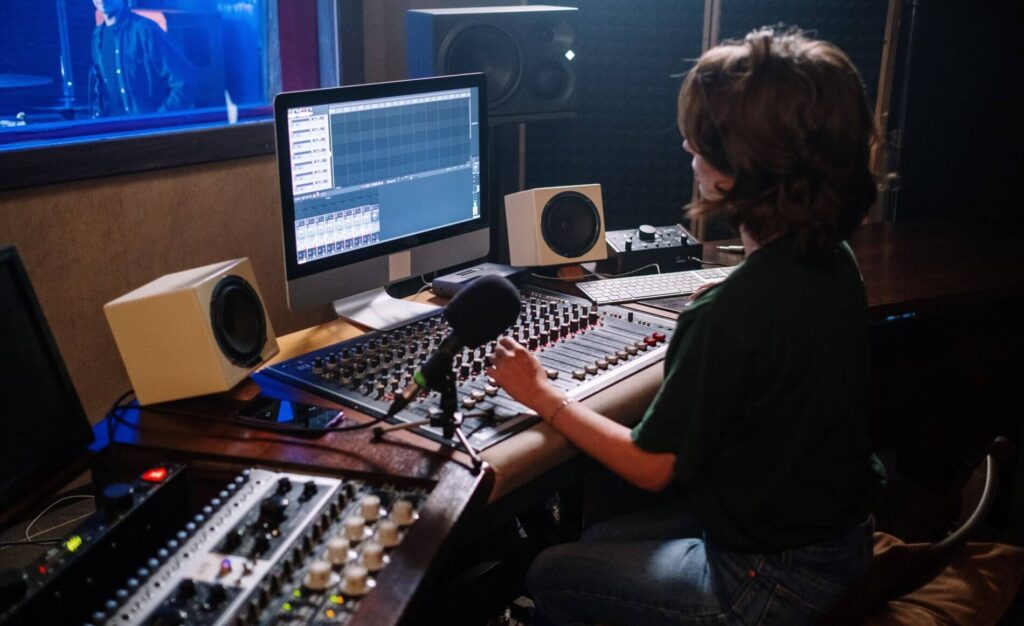
Modern soundtrack atmosphere often extends beyond traditional music into sound design. Textural sound elements can create immersive environments that support visual storytelling more directly than melody alone.
Pads are sustained tonal layers that fill sonic space. They provide continuity and help maintain emotional presence even when little melodic activity occurs.
Drones function similarly but often emphasize a single pitch or narrow tonal range, which can generate tension or meditative focus depending on context. Environmental recordings introduce realism and spatial context.
Natural sounds such as wind, distant traffic, water movement, or room resonance can blend with musical layers to create believable environments. When integrated carefully, these elements become inseparable from the soundtrack atmosphere.
Audio effects shape perception of space and motion. Filtering can simulate distance or emotional restriction. Modulation can create subtle movement within static textures.
Time based processing can stretch or compress perceived space. These techniques transform simple sounds into evolving sonic environments. Sound design allows composers to sculpt atmosphere at microscopic detail level.
Instead of thinking only in terms of notes and chords, they shape texture, density, and movement within the sound field itself.
Mixing For Soundtrack Atmosphere: Reverb, Dynamics, And Width Control
The final stage of creating soundtrack atmosphere occurs during mixing. This stage determines how all elements interact spatially and dynamically. Reverb defines perceived space. Large reverberant environments create distance and openness.
Short controlled reverberation suggests closeness and intimacy. Adjusting reverberation time and tonal color allows the composer to shape acoustic environment that matches visual setting.
Dynamic control shapes emotional intensity. Gradual increases in volume can build anticipation. Sudden reductions can create vulnerability or focus. Variation in loudness across layers prevents fatigue and maintains emotional engagement.
Stereo width influences spatial immersion. Narrow sound placement directs attention to central action. Wide spatial distribution creates environmental scale. Balanced width helps avoid clutter while preserving depth.
Frequency balance ensures clarity. Excess low frequency energy can obscure detail. Overemphasized high frequency content can feel harsh. Careful equalization allows each layer to occupy its own space within the spectrum.
Mixing transforms individual sound elements into unified soundtrack atmosphere. It is the stage where emotional design becomes perceptual reality for the listener.
See you in the next post,
Anil UZUN