
Guitar finger speed is one of the most important skills for any guitarist who wants to play smoothly, accurately, and confidently.
Many players believe speed comes from simply moving fingers faster, but in reality it is built through control, repetition, and correct technique. Without a proper foundation, trying to play faster often leads to tension, mistakes, and inconsistent sound.
That is why improving Guitar finger speed requires a structured and patient approach rather than rushing the process. Speed is not just about how quickly you can move your fingers. It is about how cleanly and efficiently you can execute each note.
A guitarist who plays slightly slower but cleaner will always sound more professional than someone who plays fast but sloppy. For this reason, developing Guitar finger speed always starts with clean and controlled playing at slower tempos.
Another important factor is muscle memory. When movements are repeated correctly, your hands begin to perform them automatically without conscious effort. This allows you to increase speed gradually without losing control.
However, if you practice mistakes, your muscle memory will reinforce those errors instead. It is also important to stay relaxed while playing.
Tension in the hands, fingers, or wrist can significantly slow you down and even lead to discomfort over time. Efficient movement and relaxed technique are essential for long term improvement.
In this guide, you will learn how to build Guitar finger speed through proper exercises, coordination techniques, and structured practice methods that lead to consistent and lasting progress.
Why Guitar Finger Speed Stays Limited Common Technical Mistakes And Better Foundations

Many guitarists struggle to improve Guitar finger speed because of hidden technical mistakes that slow down progress.
These issues are often repeated during practice, making them harder to correct later. Understanding these mistakes is the first step toward building a stronger foundation. One of the most common problems is excessive tension.
When fingers press too hard or the hand becomes stiff, movement becomes restricted. This makes it difficult to play quickly and comfortably. Relaxation is key to improving speed and maintaining endurance.
Another issue is poor hand positioning. If your thumb is not placed correctly behind the neck or your wrist angle is uncomfortable, your fingers will not move freely. This directly affects your ability to increase speed.
Proper positioning allows your fingers to move efficiently across the fretboard. Large and unnecessary finger movements are also a major limitation. Beginners often lift their fingers too far away from the strings, which wastes time and energy.
Keeping movements small and controlled is essential for developing Guitar finger speed. In addition, focusing only on speed without accuracy creates bad habits. Playing fast but with mistakes slows down real progress.
It is always better to play slowly and correctly before increasing tempo. By correcting these technical issues early, you create a solid base for improving Guitar finger speed in a more effective and sustainable way.
Guitar Finger Speed Exercises Daily Warm Ups And Finger Independence Drills
Consistent practice with the right exercises is essential for improving Guitar finger speed. Without structured training, progress becomes slow and inconsistent. Daily warm ups and finger independence drills help build strength, coordination, and control.
Warm up exercises prepare your hands and reduce the risk of strain. Simple chromatic patterns using all four fingers are a great starting point. These exercises ensure that each finger works equally and develops balanced strength.
Finger independence is another key factor. Many players struggle because some fingers are weaker than others. Practicing patterns that isolate each finger helps improve control and accuracy. Over time, this leads to smoother and faster playing.
Repeating simple patterns across different strings also improves movement consistency. It allows your fingers to adapt to various positions on the fretboard. This flexibility is important when developing Guitar finger speed across different musical contexts.
It is important to keep practice sessions focused and consistent. Short, daily sessions are more effective than long, irregular ones. This approach helps reinforce muscle memory and build lasting improvement.
By following a structured routine of warm ups and drills, you can steadily increase your Guitar finger speed while maintaining control and precision.
How To Use A Metronome To Build Speed Without Losing Clean Playing
Using a metronome is one of the most effective ways to improve Guitar finger speed while maintaining accuracy. It provides a steady rhythm that helps you stay consistent and track your progress over time.
The key to using a metronome correctly is starting at a comfortable tempo. This allows you to play cleanly and confidently before increasing speed. Jumping to a higher tempo too quickly often leads to mistakes and poor technique.
Gradual progression is essential. Increase the tempo in small steps only after you can play perfectly at the current speed. This ensures that your technique remains solid as you develop faster playing ability.
The metronome also helps improve timing and rhythm. Playing in sync with a steady beat trains your sense of timing, which is just as important as speed. Without good timing, fast playing can sound messy and uncontrolled.
Practicing with different rhythmic patterns such as triplets or sixteenth notes can further enhance your control. This variety helps you adapt to different musical situations.
When used consistently, the metronome becomes a powerful tool for building Guitar finger speed in a controlled and reliable way.
Improving Right And Left Hand Synchronization Coordination Timing And Control
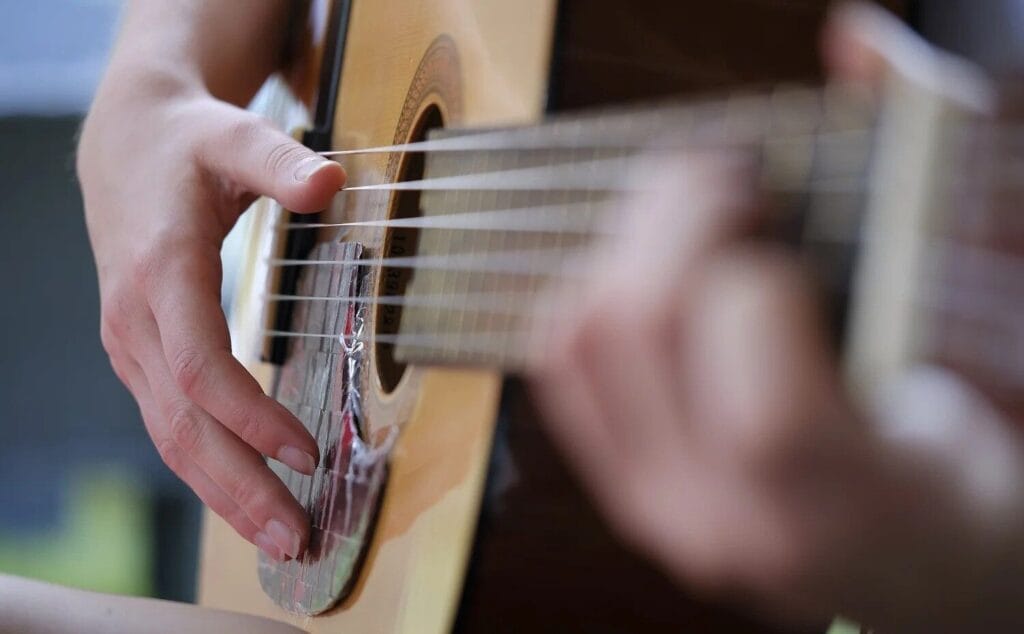
Synchronization between both hands is essential for developing Guitar finger speed. If your hands are not working together, even simple passages can sound uneven or unclear.
The goal is to make sure that both hands perform their movements at exactly the same time. If one hand is slightly ahead or behind, the notes will not sound clean. This is why coordination exercises are so important.
Start with slow and simple patterns. Focus on matching each picked note with the correct finger movement. This helps build awareness and control. Reducing unnecessary movement also improves synchronization.
Keeping your picking hand efficient and your fretting hand close to the strings allows both hands to stay aligned. Practicing single string exercises can help isolate coordination issues.
Once control is established, you can expand to more complex patterns across multiple strings. With consistent practice, hand synchronization improves, making it easier to increase Guitar finger speed while maintaining clarity and precision.
Guitar Finger Speed Mistakes To Avoid For Faster And More Efficient Practice
Improving Guitar finger speed requires avoiding common mistakes that slow down progress. Many players unknowingly repeat habits that limit their development. One of the biggest mistakes is practicing too fast too soon.
This leads to sloppy playing and weak technique. Always prioritize clean execution before increasing speed. Another issue is inconsistent practice. Skipping sessions or practicing without focus reduces progress.
Regular and structured practice is essential for improvement. Ignoring relaxation is also a common problem. Tension builds up quickly and makes fast playing difficult. Staying relaxed allows for smoother and more efficient movement.
Lack of variation in practice can also slow progress. Repeating the same exercise without changes limits development. Adding different patterns and rhythms keeps practice effective. Finally, not listening carefully to your playing can prevent improvement.
Paying attention to tone, timing, and clarity helps identify areas that need work. By avoiding these mistakes and following a structured approach, you can improve Guitar finger speed more efficiently and achieve better results over time.
See you in the next post,
Anil UZUN